1st–5th Grade
From learning to read to reading to learn.
These are the years when a child goes from learning to read to reading to learn — from counting objects on a table to reasoning through complex problems on a page. At CAVS, we guide that progression with intention.
How the Carden Method Works Across the Elementary Years
A Continuous Arc
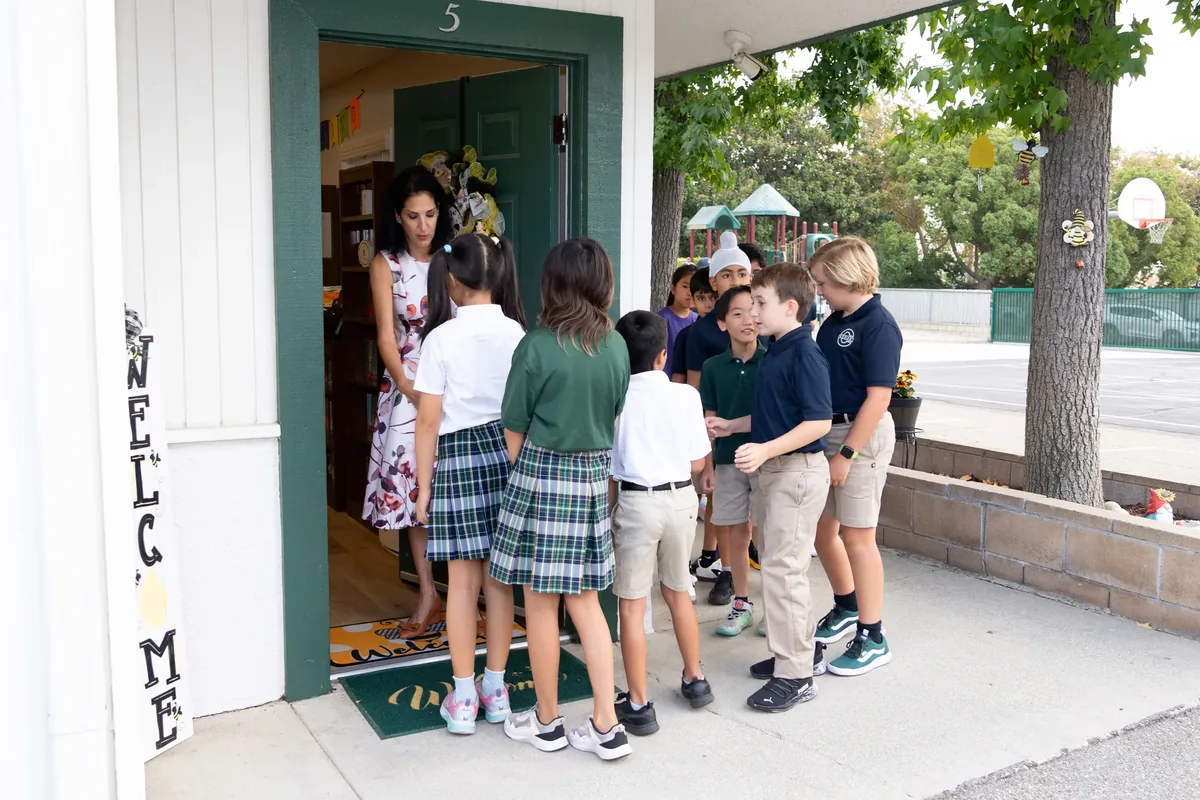
In most schools, each grade level functions largely on its own. What makes our elementary program distinctive is not just what is taught — it is how deliberately each skill is built upon the last.
A first grader learning to sound out words and a fifth grader writing a research paper are working within the same structured system — the same phonics foundation, the same composition framework, the same approach to mathematical reasoning. By the time a student reaches fifth grade, they are confident, independent, and capable of doing hard things on their own.
Five Years, Five Chapters
Our Elementary Program
First Grade
Structure and Stamina
First grade at CAVS is where the learning and studying habits are formed. Children learn that structure is not a constraint — it is what makes real learning possible. They develop the stamina to stay with difficult work, the patience to do things carefully, and the early experience of genuine accomplishment that comes from both.
By the end of first grade, a CAVS student doesn’t just know more — they know how to learn.
Second Grade
Independent Thinking
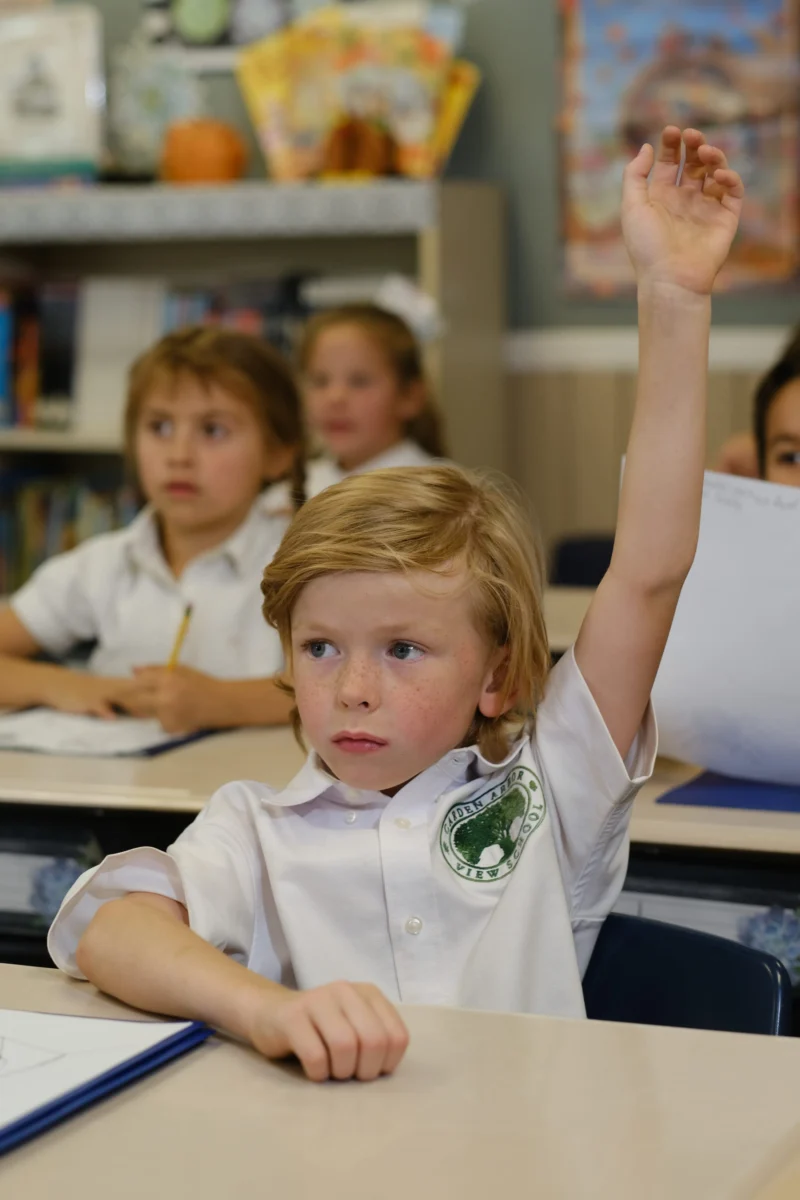
Second grade is where students begin to do their own thinking on the page. Composition forms give them a framework for organizing ideas that are genuinely their own. Mathematics grows more complex and more abstract. Reading moves from decoding to comprehension.
The second grade classroom asks children to bring something of themselves to the work, and they rise to it. The question is no longer just “what is the right answer?” but “how do I know?”
Third Grade
Depth and Discernment
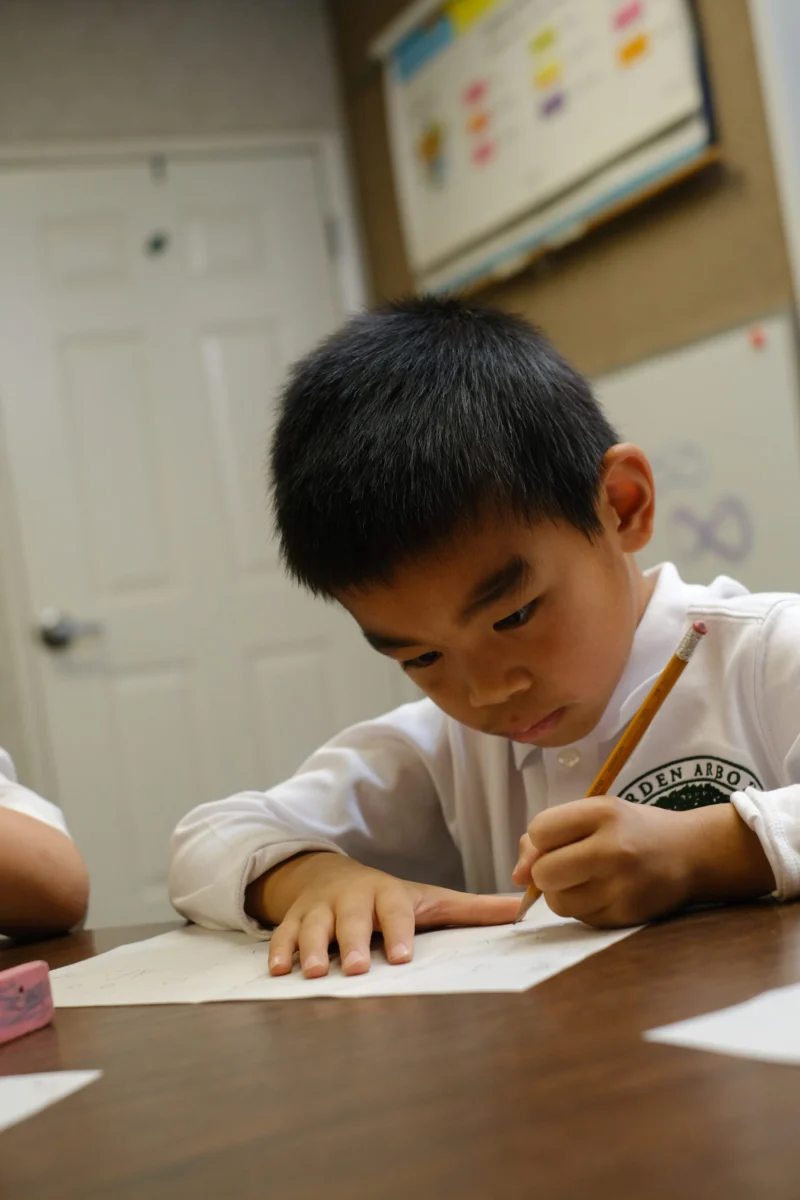
In third grade the curriculum broadens in scope and deepens in expectation. Students study world geography and American history, explore the solar system, write research papers, and begin to memorize and recite poetry with genuine understanding.
The skill being built beneath all of it is discernment: the ability to distinguish what matters from what doesn’t, fact from opinion, the main idea from the detail — a capacity they carry into every subject and every year that follows.
Fourth Grade
Responsibility
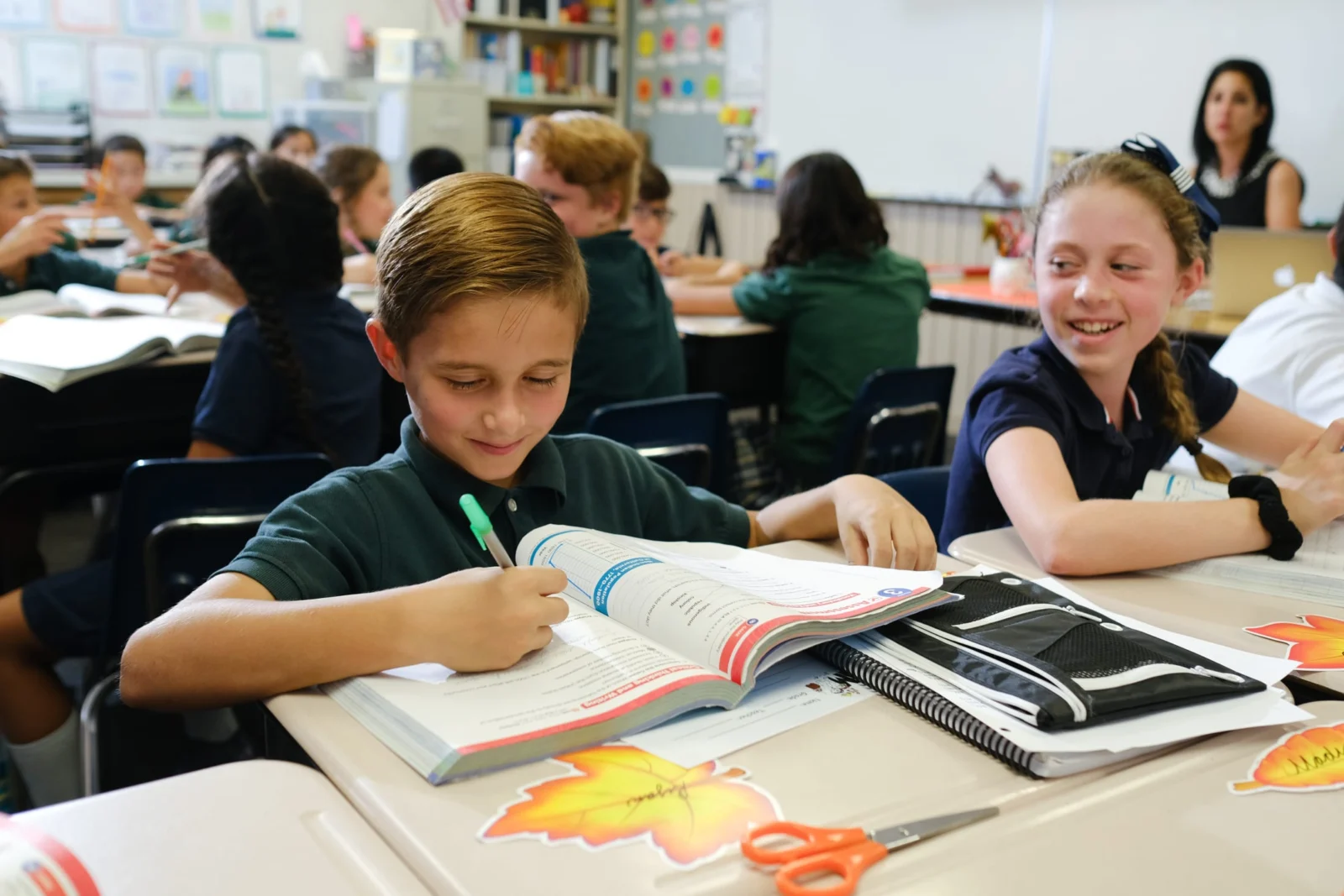
Fourth grade marks a turning point. The California Mission Project — a significant independent research and presentation undertaking — asks students to plan, execute, and own a complex piece of work from beginning to end. The curriculum across every subject grows more demanding, and so does the expectation of ownership.
Students are not just responsible for learning the material; they are responsible for managing their time, preparing independently, and producing work they can stand behind. Fourth grade is where CAVS students learn that effort and accountability are not separate from achievement — they are how achievement happens.
Fifth Grade
Preparedness
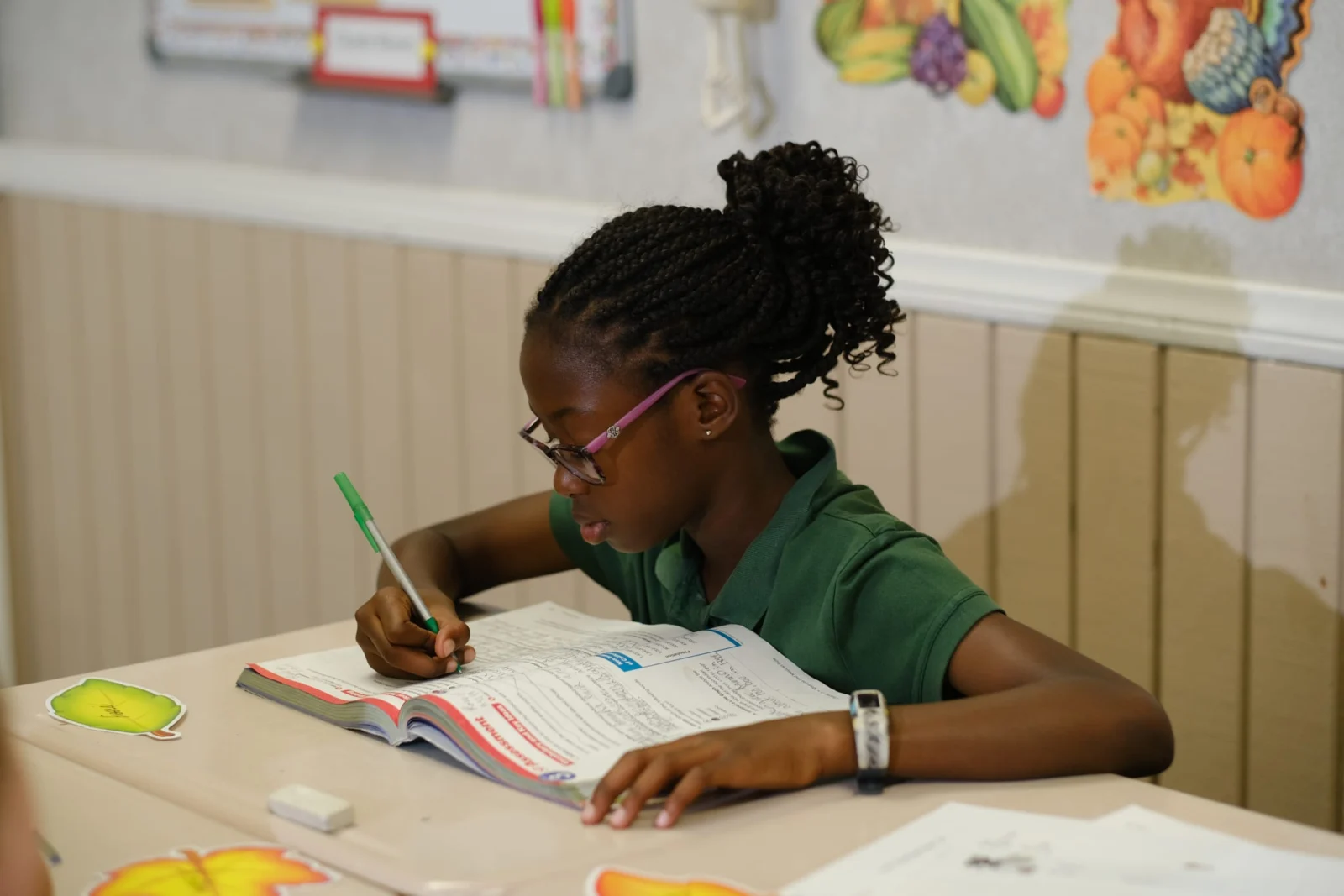
By the end of fifth grade, the foundations of an intentional lifelong learner are in place. Fifth graders at CAVS write with clarity and organization, reason through complex mathematics, read classical literature with genuine comprehension, and carry themselves with the quiet confidence of young people who have done hard things and know it.
The year is simultaneously a culmination and a preparation — closing the elementary chapter and opening the next one with a student who is not just academically ready for middle school, but genuinely equipped for what it will ask of them.
By Subject
What Your Child Is Building
Across five years and every subject, the goal is the same: genuine mastery and the confidence that comes from it.
Language Arts, Reading & Writing
First graders begin with fluent, rhythmic reading — developing comprehension, vocabulary, and a genuine love of literature alongside the mechanics. By second and third grade, the Carden composition forms give students a structured framework for their own writing: outlines, drafts, revision, and the careful organization of ideas.
In fourth and fifth grade, students write research papers, read classical literature, analyze poetry, and apply formal grammar with real facility. The Carden vowel chart and sentence-structure charts mean spelling, reading, and writing are never memorization, but founded on genuine understanding.
Mathematics
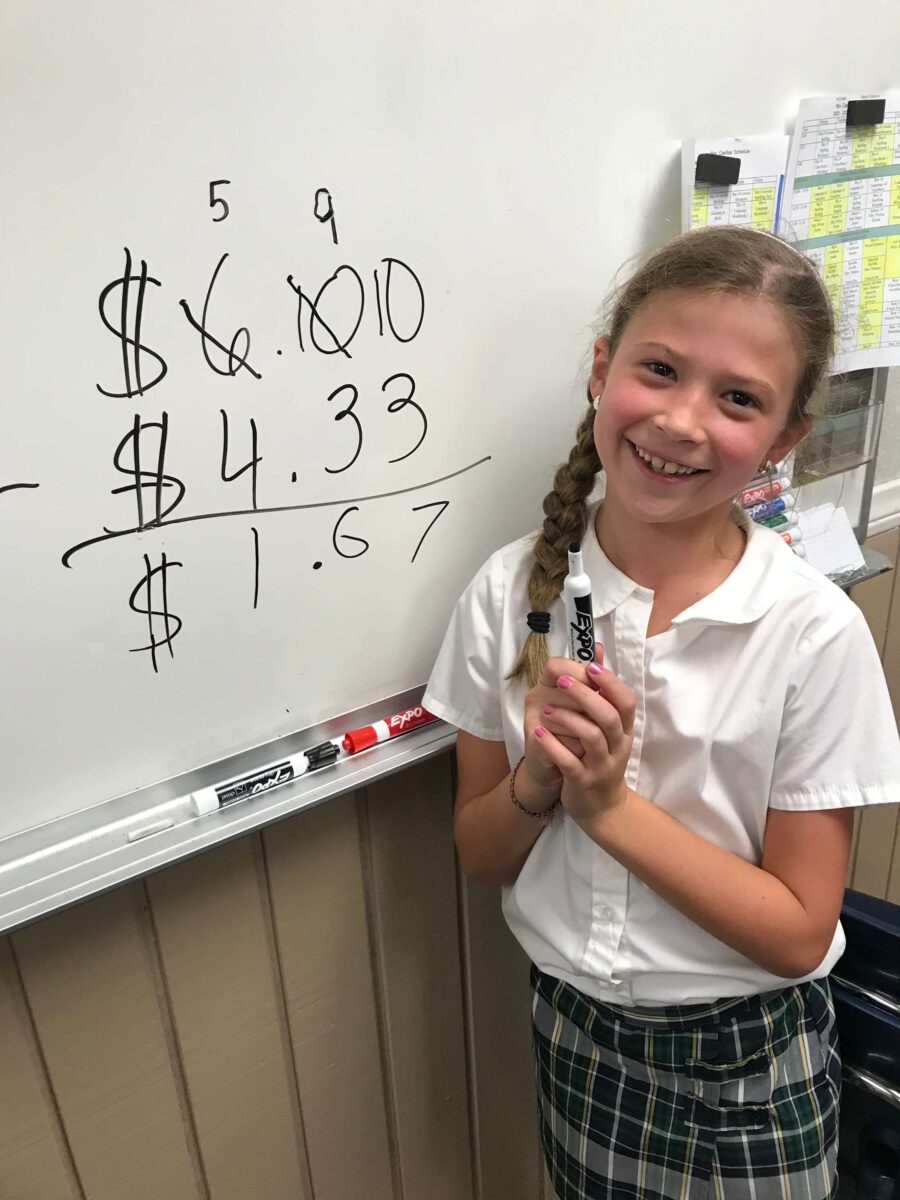
Our elementary math program builds from concrete to abstract. Addition, subtraction, multiplication, and division are developed with depth and accuracy across the early grades. By third grade, students work confidently through multiplication tables, fractions, measurement, and geometry.
Fourth and fifth grade introduce decimals, multi-step problem solving, ratio, and pre-algebraic thinking — along with the mathematical habits of mind (estimation, reasoning, checking one’s work) that separate a student who can solve a problem from one who understands why the answer is right. Word problems are woven throughout every grade.
Science
Our science program expands outward as children’s capacity for abstraction grows. Early grades explore the tangible — matter, living things, plant and animal life cycles, the senses. The middle grades introduce energy, light, the solar system, and earth science.
By fifth grade, students study ecosystems, geology, chemistry, physics, and the human body with genuine rigor — conducting experiments, analyzing results, and building the habits of careful observation that serve them in every discipline.
Social Studies, History & Geography
History is taught through literature, drama, and primary sources — not textbook material alone. Early grades develop a sense of community, culture, and the passage of time. By third grade, students survey world geography and American history through independent research projects and presentations.
Fourth grade moves through California history — including the Mission Project — and fifth grade broadens into a more detailed account of American history and civics. By middle school, students have a genuine historical framework and the research skills to keep building it.
Art & Music
Artistic development at CAVS is sequential, like everything else. Students don’t just make art — they learn to see it, describe it, and understand the choices behind it, building from basic materials in the early grades to technique, proportion, and artist study in the upper years.
The music program follows the same arc: from listening and simple rhythm in early grades to reading notation, identifying instruments, and participating in full school performances. Both develop the sustained attention and creative confidence that benefit children in every area.
World Languages
Spanish continues through every elementary grade. The program begins with oral communication — listening, speaking, songs, and games — and builds toward vocabulary, grammar, and cultural understanding. By fifth grade, students have years of exposure and a genuine foundation in a world language, along with a curiosity about the wider world. In middle school, students are able to choose between French and Spanish for their world language requirement.
Physical Education
Physical development at CAVS is as intentional as academic development, moving from basic gross-motor skills and spatial awareness in the early grades to fitness, teamwork, and an understanding of how the body works in the upper grades.
Students learn good sportsmanship, what healthy movement feels like, and how to take responsibility for their own physical development — leaving fifth grade with healthy habits and real physical confidence.
Technology
Students develop digital literacy across the elementary years — from basic navigation and typing in first grade through word processing, multimedia presentations, and research tools by fifth grade.
Technology is a tool at CAVS, not a curriculum. We are intentional about our students’ relationship to it — teaching not just how computers are used, but when, why, and how to use them with high integrity.
On the Other Side
How Fifth Graders Are Prepared For Middle School
By the end of fifth grade, CAVS students read complex texts with comprehension and genuine engagement, write organized and articulate prose, and solve multi-step problems with accuracy and confidence. They know how to study, how to prepare, and how to ask for help when they need it.
They have performed in front of audiences, completed independent research projects, built solar-system models, completed their first Science Fair project and learned to greet a stranger in two languages. More than any of that: they know who they are as learners — and they are ready for what comes next.
See Our Classrooms in Action
The best way to understand a Carden elementary classroom is to step inside one. Tours include time in real classrooms during the school day.